HIFU
A considered approach to firmness and definition
When your jawline feels less defined or your skin begins to look less firm, the right approach starts with understanding what has changed.
At Revive Esthetics, HIFU is considered as part of a personalised assessment of your face and neck. This non-surgical ultrasound treatment may improve the appearance of mild skin laxity, with changes developing gradually over time.

What is HIFU
HIFU stands for high-intensity focused ultrasound. In aesthetic skin treatments, focused ultrasound delivers energy beneath the skin's surface, creating small zones of heating at selected depths.
This controlled thermal effect is intended to stimulate a tissue repair response and collagen remodelling. In suitable clients, this may lead to a gradual improvement in the appearance of firmness and selected facial contours.
HIFU does not involve injections or incisions. However, it delivers energy into tissue and carries risks. The outcome depends on the device, treatment plan, anatomy and individual response.
HIFU cannot remove significant excess skin or reproduce the structural changes of a surgical facelift.
What would you like to improve?
A softer-looking jawline
If mild skin laxity is affecting the appearance of your jawline, HIFU may be one option to explore. We assess whether the concern relates to skin looseness, volume changes or another cause before recommending treatment.
Looseness beneath the chin
The under-chin area can change for several reasons. We assess the skin and underlying tissues to determine whether tightening is an appropriate goal. Skin tightening and fat reduction are different treatment aims and should not be assumed to be interchangeable.
Changes in neck firmness
Selected neck concerns may be suitable for ultrasound treatment. Neck anatomy requires careful assessment, and not every part of the neck is appropriate to treat.
Your consultation establishes which areas, if any, can be treated using our device and whether another approach would better suit your needs. Thin skin, facial hollowing, significant laxity or substantial excess skin may lead us to recommend a different option or specialist advice.
-
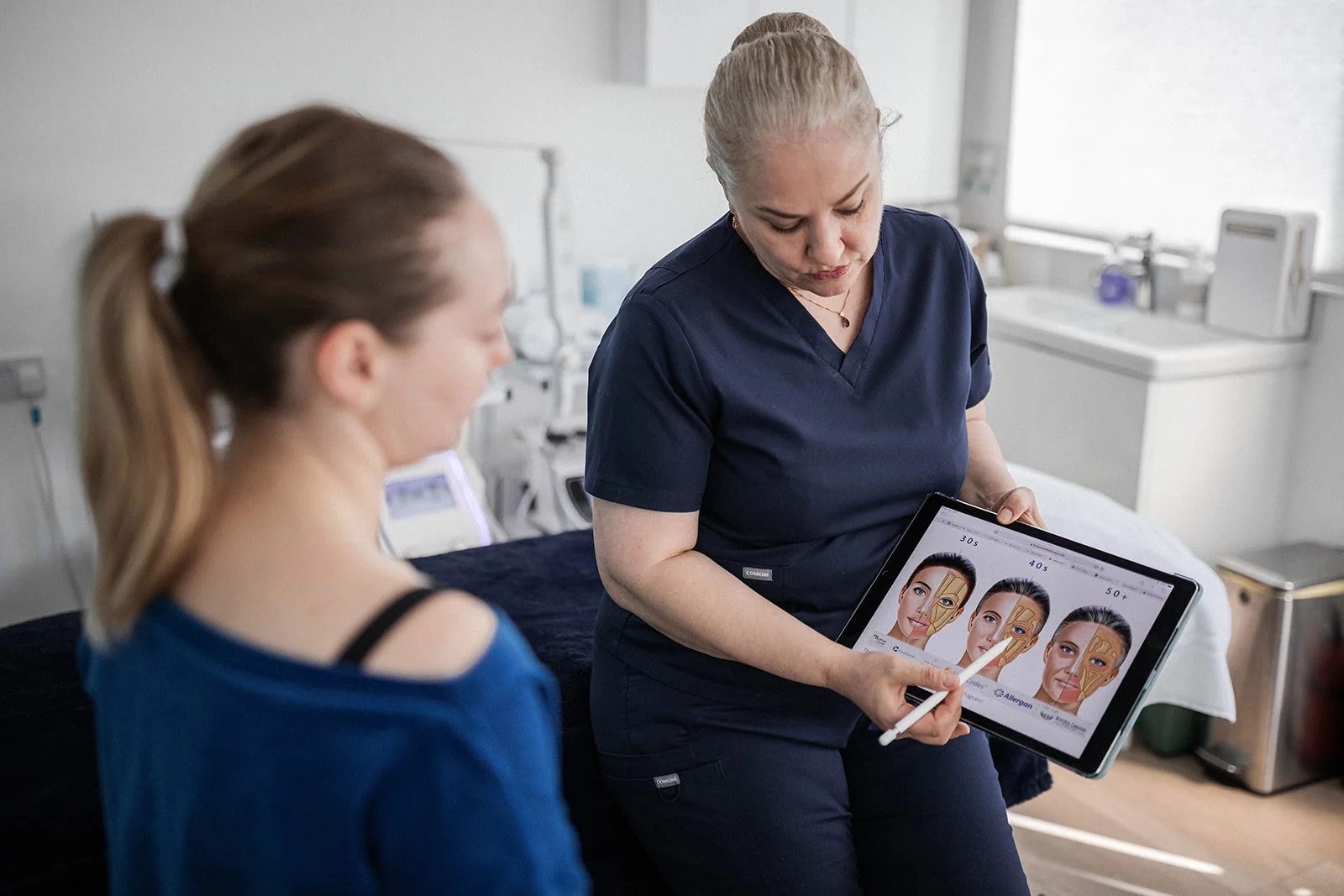
We begin by discussing the changes you have noticed and the improvements you would like to explore. Your assessment considers skin laxity, facial structure, tissue thickness and existing volume. Photographs help document your starting point. Skin analysis can support the discussion but does not replace assessment of the deeper tissues.
HIFU may be considered for selected mild laxity concerns. It may not be appropriate where there is marked hollowing, very thin tissues, significant excess skin or expectations that non-surgical treatment cannot meet.
Your medical history
Please tell us about pregnancy or breastfeeding; implanted electronic devices; metal or other implants in or near the treatment area; active infection, open wounds or inflamed skin; conditions affecting sensation, bleeding, immunity or healing; and any previous nerve problems or facial surgery.
We also need to know about prescribed medication, supplements, allergies, recent dental or facial procedures, threads, fillers, skin boosters, anti-wrinkle injections and other energy treatments. Tell us if you have experienced facial fat loss, unexpected reactions or complications after a previous procedure.
This is not a complete list. Device-specific restrictions and your individual circumstances determine whether treatment can proceed, should be postponed or needs medical advice. Do not stop prescribed medication without advice from your prescriber.
An informed plan
If HIFU is appropriate, we explain the proposed areas, likely benefits, recovery, possible complications and costs. We discuss alternatives and allow time for questions. You do not need to commit to treatment at your consultation.
-
Before your visit
Follow the preparation advice supplied by the clinic.
Let us know about any change in your health, medication or skin. Contact us before attending if you develop a rash, infection, sunburn or another concern affecting the area.
Avoid arranging other facial procedures close to your appointment without discussing their timing with us. We confirm your appointment length and any preparation requirements when booking.
Preparing your skin
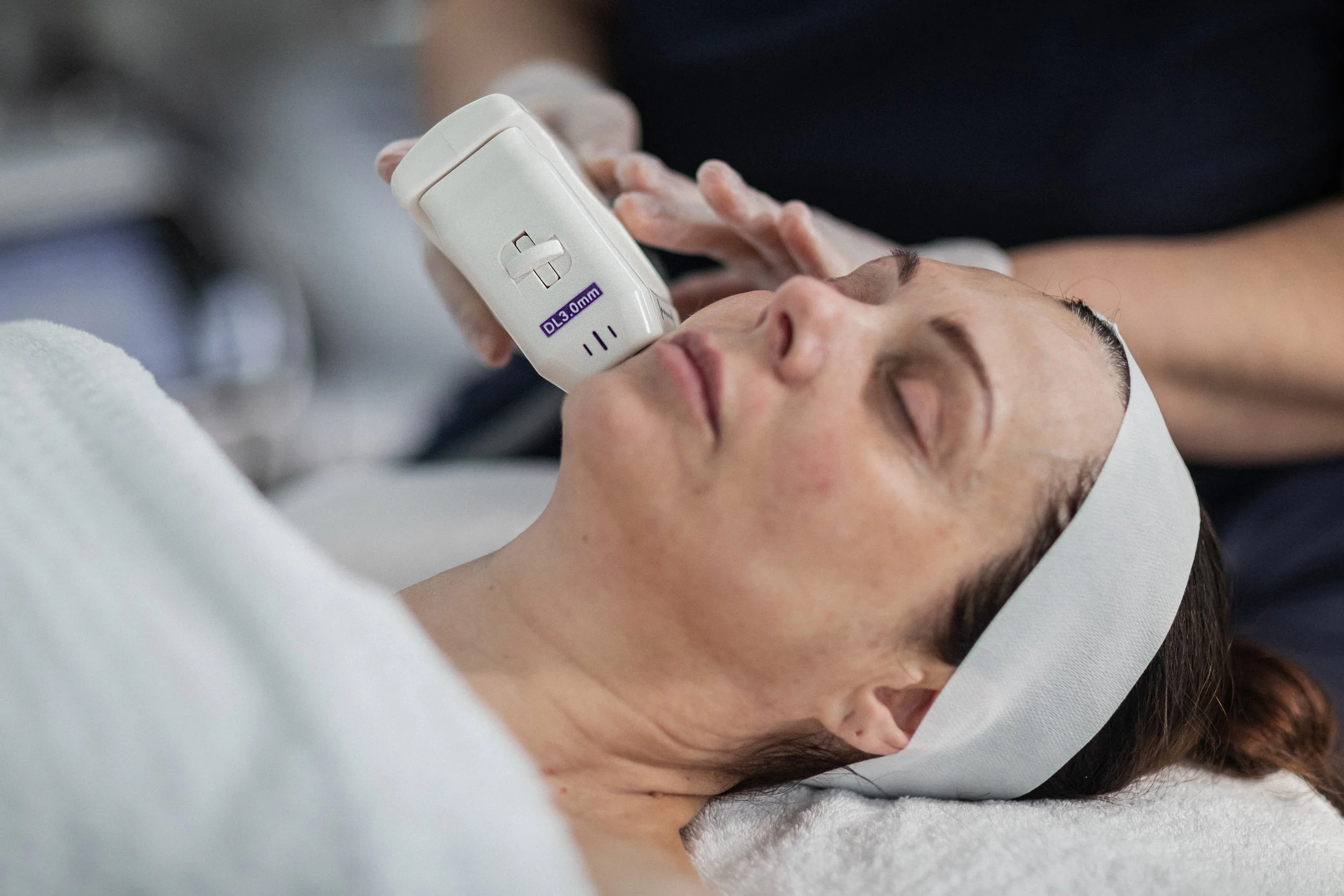
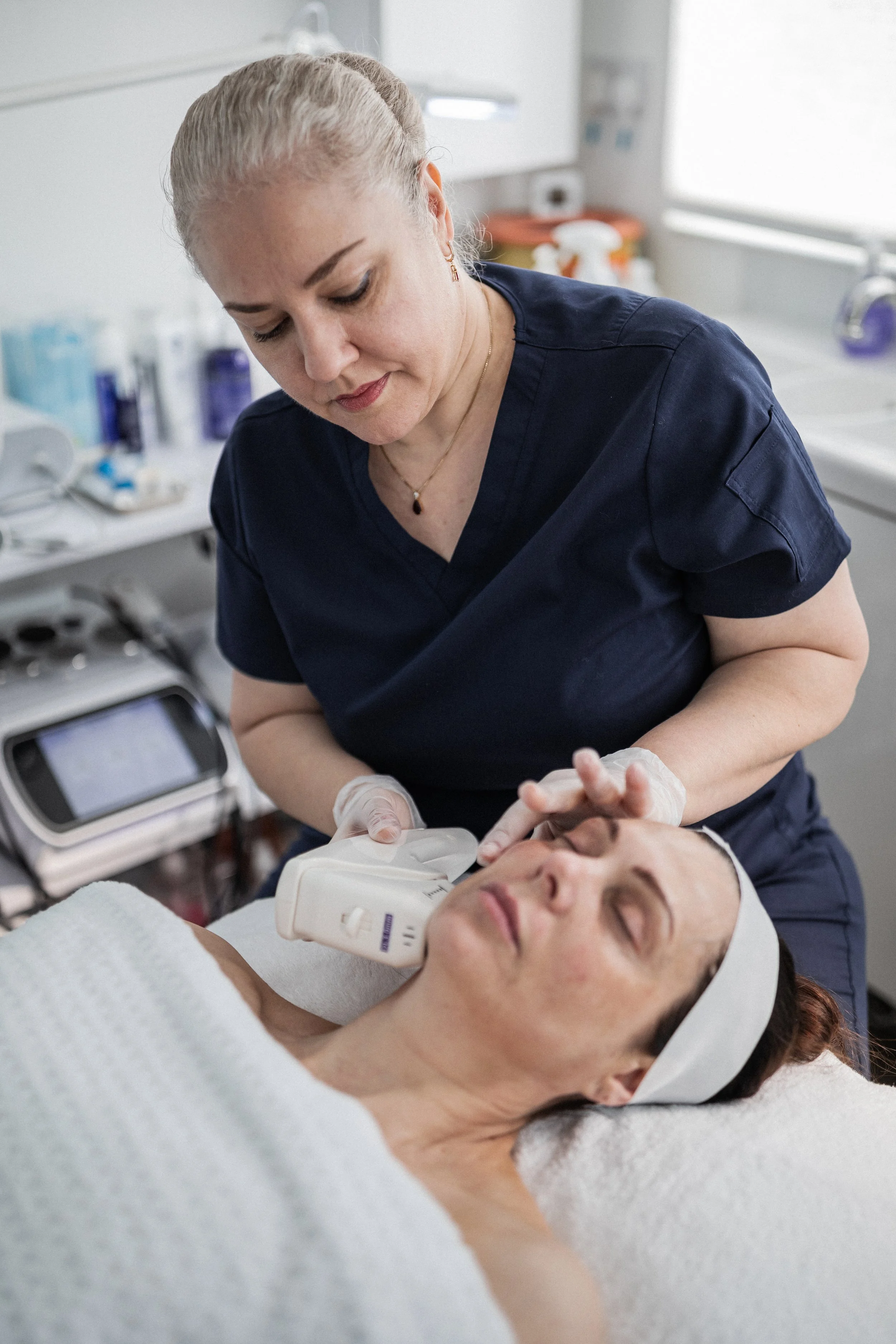
We review the agreed plan, answer questions and confirm consent. Your skin is cleansed, treatment zones are assessed and marked where appropriate, and ultrasound gel is applied to support contact between the handpiece and skin.
What the treatment feels like
The handpiece delivers energy to the agreed zones. Sensations can include warmth, prickling, deeper aching or brief sharp discomfort. Some areas are more sensitive than others, and HIFU should not be described as painless.
Tell us if discomfort becomes difficult to tolerate or feels unusual. We can pause and reassess; you should never feel that you must endure severe pain for a better result. Comfort measures are discussed individually.
Before you leave
We check the treated area and explain your aftercare, expected reactions and review arrangements. Please ask if any instruction is unclear.
-
Immediately afterwards
You may notice redness, mild swelling or tenderness. Some people have little visible change; others experience more noticeable reactions. A lack of visible redness does not predict the result.
The following days and weeks
Tenderness, bruising, tingling or altered sensation may occur. Some symptoms can last longer than visible redness or swelling. Report persistent, unusual or worsening symptoms rather than assuming they are part of normal recovery.
Many people resume routine activities relatively soon, but downtime cannot be guaranteed to be zero. Plan around important events and follow your individual activity and skincare advice.
Assessing your progress
Changes develop over weeks to months. We commonly review around three months and use comparable photographs where appropriate. Immediate photographs do not establish a final tightening result.
Results vary and some people see limited improvement. HIFU cannot reproduce a surgical facelift or restore lost facial volume. We review your outcome before considering further treatment or a different approach.
-
Possible reactions and complications
Redness, swelling, tenderness, bruising and discomfort can occur. Altered sensation, numbness, tingling or temporary muscle weakness have also been reported with focused ultrasound treatments.
More significant complications can include burns, blistering, scarring, pigment changes, nerve injury, asymmetry and unwanted fat or volume loss. Some complications may persist and require medical care. The risks depend on the device, treatment area, technique and individual factors; no treatment is risk-free.
Caring for your skin
Use gentle cleansing and the skincare recommended for you. Avoid vigorous rubbing, facial massage and home skin devices until advised. If the skin feels sensitive, pause irritating products and ask when to restart them.
Follow given advice on heat, exercise, swimming and makeup. Avoid excessive heat or activities that aggravate tenderness or swelling during the initial recovery period. Do not apply ice directly to the skin or begin medication for a reaction without appropriate advice.
Use daily broad-spectrum SPF 30 or higher, shade and sensible sun protection. Avoid tanning and sunburn. Arrange other procedures only after discussing suitable timing with us.
When to contact us
Contact the clinic promptly if pain or swelling is increasing, or you develop blistering, broken skin, persistent numbness, unusual skin colour changes, facial weakness, asymmetry or an unexpected change in contour.
Seek urgent medical help for severe symptoms, visual changes, difficulty swallowing or difficulty speaking. Sudden facial drooping or weakness with speech difficulties may indicate an emergency unrelated to treatment: call 999. If you cannot reach the clinic and need urgent advice, contact NHS 111. Do not wait for a routine review if you are concerned.
Your follow-up care
Your review is an opportunity to assess your response, discuss any concerns and decide whether further treatment is appropriate. Please contact us sooner if recovery does not follow the advice you were given.
What to expect
-
HIFU may be suitable if you are noticing mild skin laxity, a softer jawline or reduced firmness around the lower face and neck, and would like to explore a non-surgical approach.
At Revive Esthetics, we assess your skin, facial structure, existing volume, medical history and previous treatments before recommending a plan. HIFU is not appropriate for everyone, particularly where significant excess skin or facial hollowing is the main concern. Your consultation helps establish whether it is the right choice for you.
-
Common areas assessed include the lower face, jawline, beneath the chin and selected areas of the neck. Other areas, such as the upper face or décolletage, depend on your individual assessment.
We explain exactly which areas can be treated and what counts as a treatment area before you book. Body HIFU requires a separate assessment and treatment plan.
-
Results develop gradually as your skin responds to treatment and collagen remodelling takes place. Some people notice early changes, but these should not be considered the final outcome.
Improvement is generally assessed over approximately two to three months, with further changes possible over the following months. We usually recommend a review around three months to assess your response. The timing and extent of improvement vary, and results cannot be guaranteed.
-
Results are not permanent, and their duration varies according to your skin, individual response, lifestyle and the treatment performed. Studies of certain focused ultrasound systems have reported improvements lasting up to a year, but this cannot be promised for every person or device.
Ageing continues after treatment. At your review, we discuss your progress and whether maintenance may be appropriate, rather than recommending repeat treatment automatically.
Your questions answered
Begin with a conversation
A clear plan, from consultation to review
Consultation - We discuss your concerns, assess suitability and explain your options, including the likely benefits, limitations and risks.
Preparation - Your skin is cleansed, the agreed treatment area is assessed and marked where appropriate, and ultrasound gel is applied.
Treatment - The handpiece is placed against the skin to deliver focused ultrasound to the planned treatment zones. We check your comfort throughout.
Review - You receive aftercare guidance and a planned review to assess changes as they develop.